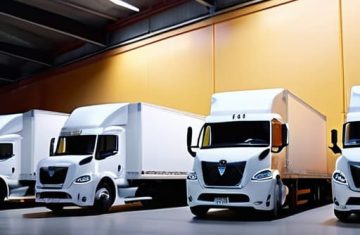
I remember standing on the rain-slicked loading bay of a warehouse in Birmingham back in ’94, staring at a crushed pallet of high-end electronics that had been tossed around like playing cards in the back of a poorly secured van. The driver was sweating, the client was shouting, and the owner was frantically flipping through a policy he’d clearly never read. He thought he was protected, but he didn’t actually understand how goods in transit cover works—he just thought he’d bought a “safety net” that would catch everything. That’s the mistake I saw thousands of times: assuming a premium payment is a magic wand that fixes any disaster.
I’m not here to sell you a policy or tell you that every mishap is your insurer’s problem. My goal is to pull back the curtain on the actual mechanics of these claims, from the specific loading requirements that can void your cover to the way “limit of liability” can quietly leave you footing the bill. I’ll show you exactly where the gaps are hidden so that when the inevitable happens, you aren’t left staring at a declined claim wondering where it all went wrong.
The Illusion of Safety How Goods in Transit Cover Works
Most people approach transit cover with a dangerous sense of complacency. They assume that because a professional logistics company is moving their goods, the risk is somehow managed. It isn’t. In my thirty-seven years, I’ve seen countless business owners mistake a carrier’s standard terms for actual protection. You have to understand the fundamental difference between carrier liability vs insurance. A carrier’s liability is often limited by international conventions to a tiny fraction of the cargo’s actual value—usually calculated by weight, not by what the item is actually worth. If a pallet of high-end electronics is crushed, the carrier might owe you the price of a few copper wires and some plastic, leaving you to swallow the rest of the loss.
True protection requires a dedicated policy that actually covers the value of the goods, not just the legal minimums. This is where people trip up on transit insurance policy exclusions. You might think you’re covered for everything from theft to water damage, but if your packaging doesn’t meet specific industry standards, or if the goods aren’t properly secured for the journey, the adjuster is going to point straight to that exclusion clause. It’s not about being difficult; it’s about the contract you signed.
Marine Cargo Insurance Explained Beyond the Paper Promise
Most people think that if a driver drops a pallet or a ship hits a swell, the carrier is on the hook for the full value of the goods. That is a dangerous assumption. In my thirty-seven years, I’ve seen countless shippers walk into a claim thinking they were protected, only to realize they were fighting against limited carrier liability vs insurance protections. Carriers operate under strict legal limits—often calculated by weight rather than value—meaning if a high-value shipment goes missing, the compensation they owe might only cover the cost of the packaging, not the product itself.
That is where the reality of marine cargo insurance explained actually matters. It isn’t just a piece of paper; it is the buffer between a manageable loss and a business-ending event. When you look at your policy, you need to stop looking at the premium and start looking at the transit insurance policy exclusions. If your wording excludes “inherent vice” or specific types of moisture damage, you aren’t actually protected against the very risks that plague long-haul freight. You aren’t just buying a policy; you are buying the certainty that the wording won’t fail you when the cargo is at the bottom of a container.
Carrier Liability vs Insurance the Gap Where Profits Die
This is where I see the most heartbreak in my post-retirement consultations. People tend to conflate what a driver is responsible for with what an insurance policy actually pays out. They assume that if a pallet of electronics arrives crushed, the carrier is on the hook for the full invoice value. That is a dangerous assumption. Most carriers operate under strictly limited legal frameworks—like the CMR in Europe or various COGSA provisions—that cap their financial responsibility based on the weight of the lost goods, not their actual value.
If you are moving high-value machinery and the carrier loses it, you might find their legal liability is only a fraction of what that machine cost you. This is the fundamental difference in carrier liability vs insurance. One is a limited legal obligation to mitigate loss; the other is a contractual transfer of risk. Without a dedicated policy, you aren’t just managing a delay; you are staring at a massive hole in your balance sheet. Relying on a carrier’s basic responsibility for protecting freight during shipment is like bringing a cocktail umbrella to a monsoon—it might look like cover, but it won’t keep you dry when the storm actually hits.
Transit Insurance Policy Exclusions When the Wording Fails You
I’ve sat in enough damp warehouses and loading bays to know that a claim rarely fails because of a mystery; it fails because of a sentence you didn’t bother to read. When people ask me about transit insurance policy exclusions, they usually expect a list of “acts of God.” In reality, the sting comes from much more mundane wording. You might think you’re protected, but if your policy excludes “inherent vice,” you’re in trouble the moment fruit starts to rot or metal begins to corrode due to its own nature. The insurer isn’t being difficult; they are simply following the contract you signed.
Then there is the matter of packaging. I cannot tell you how many times I’ve seen a claim for transit damage liability denied simply because the goods weren’t “packed sufficiently to withstand the ordinary rigours of transport.” It sounds reasonable on paper, but in a dispute, that phrase is a wide, gaping hole. If your logistics risk management doesn’t include a rigorous check of your crating standards, you aren’t actually protecting your freight during shipment—you’re just paying a premium for a very expensive piece of paper.
Mastering Logistics Risk Management and Protecting Freight During Shipment
If you think buying a policy is the end of your responsibility, you’ve already lost the battle. In my thirty-seven years, I’ve seen countless claims denied not because the policy was bad, but because the claimant failed to prove they had taken reasonable steps to mitigate risk. True logistics risk management isn’t a checkbox for your compliance department; it is the physical reality of how your goods are lashed, palletized, and temperature-controlled. If a crate of electronics arrives smashed because it was stacked under a ton of steel, no amount of clever wording in a policy will save you from a subrogation fight that lasts years.
You have to bridge the gap between the paper promise and the warehouse floor. This means implementing rigorous inspection protocols at every handover point. If you aren’t documenting the condition of the freight the moment it leaves the dock, you are essentially handing the insurer a reason to invoke transit insurance policy exclusions related to “inherent vice” or improper packaging. Don’t wait for a loss to realize your documentation is thin. If you can’t prove the damage happened during transit and not during loading, you’re going to be fighting an uphill battle for every cent of that payout.
Five Hard Lessons from Thirty-Seven Years of Claims
- Stop assuming the carrier is your safety net. I’ve seen more businesses ruined by the “limitation of liability” clauses in transport contracts than by actual accidents. If your cargo is worth £50,000 but your carrier’s contract limits their payout to £500 per kilo, you aren’t protected—you’re just gambling.
- Check your “valuation” clause before the wheels turn. A common mistake I see is insuring for the cost of the goods rather than the replacement value plus freight and duties. If you underinsure by even ten percent, the principle of average kicks in, and the insurer will shave ten percent off your entire claim.
- Document the “condition of goods” at every handoff. In my experience, the biggest battle in a transit claim isn’t proving the damage happened, it’s proving it happened during transit and not in your own warehouse. If your BOL (Bill of Lading) isn’t noted with specific discrepancies at the point of delivery, you’ve essentially handed the insurer a reason to decline the claim.
- Read the “packing” exclusion with extreme care. It is one of the most frequently invoked clauses in the industry. If the loss was caused by “insufficient or improper packaging,” the policy is often dead on arrival. You can have the best transit cover in the world, but if your palletization doesn’t meet the insurer’s standard, you’re paying for a paper promise.
- Verify the “route and mode” specifics. I once handled a claim where the goods were diverted through a high-risk zone not disclosed in the original risk assessment. If the policy specifies sea freight and you switch to air to make up for a delay, you might find yourself standing in a very expensive hole with no coverage at all.
The Bottom Line: What You Actually Need to Know
Stop assuming the carrier is your safety net; their legal liability is often a fraction of your cargo’s value, and that gap is where your business will bleed cash if you aren’t carrying your own insurance.
A policy is only as good as its definitions, so check exactly what “transit” means in your wording—if it doesn’t cover the moment the goods leave the warehouse or the moment they hit the loading dock, you’re unprotected during the most dangerous parts of the journey.
Don’t let a cheap premium blind you to underinsurance; if you’re insuring your cargo based on outdated costs and forget to account for rising freight or replacement values, you’ll be left staring at a payout that doesn’t even cover the cost of getting back to zero.
The Bottom Line on Moving Goods
If you’ve followed me this far, you hopefully realize that “goods in transit” isn’t just a line item on a spreadsheet; it is a complex web of contractual obligations and significant gaps. We have looked at why relying on a carrier’s limited liability is a dangerous gamble, how marine cargo policies differ from standard transit cover, and why those pesky exclusions are the first thing an adjuster looks at when a claim lands on my desk. You cannot simply buy the cheapest policy and assume you are protected. You have to understand the difference between actual coverage and the mere illusion of security created by a low premium.
At the end of the day, insurance is about certainty in an uncertain world. I spent nearly four decades seeing the fallout when people treated their policies as an afterthought. My advice is simple: stop reading your policy when the cargo is already missing and start reading it while your business is running smoothly. Don’t wait for a disaster to find out if you are underinsured or if your specific type of damage is excluded. Own your risk by knowing exactly what you have bought, because once the truck leaves the warehouse, the clock is already ticking on your liability.
Frequently Asked Questions
If my carrier is already liable for the damage, why on earth am I paying a separate premium for transit insurance?
Because “liable” is a legal theory, but a payout is a practical reality. I’ve spent decades watching businesses wait months for a carrier to admit fault, only to be told their liability is capped at a few cents on the dollar due to standard tariff limits. You aren’t paying for the same thing twice; you’re paying to bypass the legal argument and move straight to the settlement. One is a hope; the other is a contract.
How do I know if I've underinsured my cargo, and will the insurer use a "valuation" clause to slash my payout if I haven't?
You’ll know you’ve underinsured if your sum insured is based on “cost” when the policy demands “replacement value plus freight.” If a claim hits, the insurer won’t just pay the difference; they’ll apply the principle of average. If you’re insured for only 50% of the true value, they’ll only pay 50% of your loss. They don’t need to be villains to do it—they just follow the math written in your valuation clause.
What specific wording should I look for to ensure my cover doesn't vanish the moment a shipment is transferred from a truck to a warehouse?
You need to look closely at the “Transit” definition. Many policies define transit as the movement from point A to point B, but they stop the clock the moment the wheels stop turning. If your wording doesn’t explicitly include “storage in transit” or “intermodal transfer,” you’re exposed. Look for terms that bridge the gap between the vehicle and the warehouse floor. If the policy doesn’t cover the loading and unloading process specifically, you’re flying blind.