
I remember standing in a flooded basement in Surrey back in ’94, the smell of damp drywall and old silt thick in the air, listening to a man explain how “unlikely” it was that his sump pump would fail. He had a premium policy, but he hadn’t actually looked at what it covered regarding mechanical breakdown versus external flooding. Most people approach insurance like a safety net they hope never to touch, but when they finally do, they realize they’ve been leaning on a sieve. If you’re looking for a beginner guide to assessing situational risk, you won’t find it in a glossy brochure or a sales pitch from an agent trying to hit a monthly quota; you’ll find it by looking at the gap between what you think is happening and what your policy actually says.
I’m not here to sell you a more expensive premium or scare you with ghost stories. My goal is to give you the plain truth about how to spot the vulnerabilities in your own life before the claim adjuster—someone like my younger self—has to stand in your living room. I will show you how to identify the real threats to your assets and, more importantly, how to ensure your coverage actually matches your reality.
Mastering Threat Assessment Techniques for Beginners

Now, while I’m talking about physical hazards like damp or faulty wiring, don’t overlook the importance of securing your personal digital space as part of your overall risk profile. Just as a leaky pipe can ruin a floorboard, a lapse in privacy can leave you vulnerable to all sorts of modern liabilities that your standard home policy might not touch. If you find yourself needing a bit of guidance or a way to navigate those more complex, private social landscapes safely, looking into resources like adult chat France can be a way to understand how different online environments operate. It’s all about knowing the terrain before you step onto it; whether it’s a physical basement or a digital forum, the principle remains the same: you need to know the rules of the room before you risk anything.
When I was out in the field, I learned that most people look for the obvious disaster—the fire, the flood, the break-in. But if you want to get serious about identifying environmental hazards, you have to look at the things that sit quietly in the background. I’m talking about the aging electrical circuit behind a heavy appliance or the way a garden slope directs water toward a foundation during a heavy downpour. You don’t need a degree to start; you just need to stop looking at your home as a finished product and start seeing it as a collection of moving parts that can fail.
Effective risk mitigation strategies aren’t about buying every gadget on the market; they are about developing a systematic way of looking at your surroundings. I always tell my neighbors to adopt a basic safety assessment framework before they even look at a premium quote. Walk through your property and ask yourself: “If this specific thing fails, what is the secondary effect?” If a pipe bursts, it’s not just about the water; it’s about the electrical outlets in the baseboards and the structural integrity of the floorboards below. That is the kind of thinking that keeps a claim from becoming a total loss.
Identifying Environmental Hazards You Havent Noticed Yet
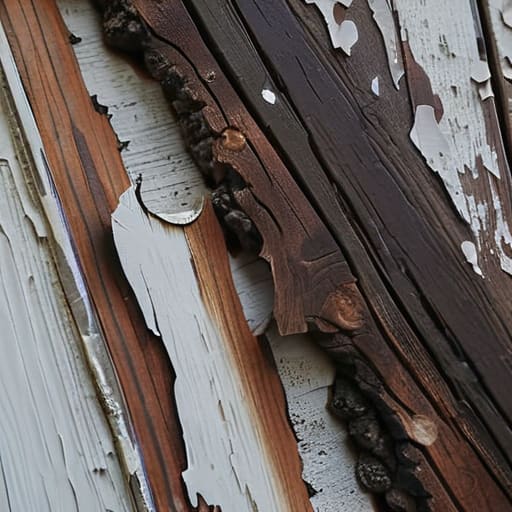
When I was out on site, I learned quickly that the most expensive disasters aren’t the ones that make a loud noise; they’re the ones that happen quietly in the background. Most people look at their property and see a home, but I see a collection of potential failure points. You might think you’re fine because there isn’t a fire or a flood right now, but identifying environmental hazards requires looking at the things that are slowly wearing down. I’m talking about the slight damp patch near a window frame that you’ve ignored for six months, or that old electrical socket that occasionally crackles. To an insurer, those aren’t just quirks; they are the precursors to a claim that we will eventually have to scrutinize.
You don’t need a degree to start evaluating potential dangers in real-time, you just need to stop looking at your surroundings through the lens of comfort. Walk through your house with a different mindset. Look up at the ceilings for water marks, check the slope of your driveway for drainage issues, and listen to the hum of your appliances. If you wait until the ceiling collapses to notice the leak, you’re no longer assessing risk—you’re just managing a catastrophe.
Five Reality Checks Before You File a Claim
- Stop looking at what you want to protect and start looking at what you actually own. Most people underestimate the value of their contents by thirty percent or more, and when the smoke clears, that “underinsurance” clause is going to bite you harder than the fire itself.
- Get comfortable with the word ‘exclusion’. I’ve spent decades reading policies where the cover looks broad on page one, only to find a tiny paragraph on page twenty saying they don’t cover anything resulting from a specific type of water ingress or wear and tear. You need to find those exclusions now, while your roof is still dry.
- Document the ‘before’ while it’s boring. A photo of your living room today is worth more than a thousand frantic descriptions of it tomorrow. If you can’t prove the condition and the value of an item before the incident, you’re essentially asking the adjuster to guess, and we rarely guess in your favour.
- Learn to distinguish between a ‘peril’ and a ’cause’. You might think you’re covered for “water damage,” but if the policy specifically excludes damage caused by “gradual seepage” or “failed seals,” you’ve got a problem. Knowing the difference between a sudden burst pipe and a slow leak is the difference between a payout and a polite rejection letter.
- Don’t assume ‘all risks’ means ‘everything’. In my experience, the phrase “all risks” is often followed by a laundry list of “except for…” conditions. Sit down with your policy wording—the actual contract, not the glossy brochure—and trace the path of a potential disaster to see where the coverage actually stops.
The Reality Check

At the end of the day, assessing situational risk isn’t about becoming a professional inspector; it’s about moving from passive ignorance to active awareness. We have looked at how to spot the obvious environmental hazards and how to apply a more disciplined approach to threat assessment. If you take nothing else from this, remember that risk is rarely a single, catastrophic event that appears out of thin air. Instead, it is usually a slow accumulation of small, overlooked vulnerabilities—a slightly aging pipe, a poorly secured perimeter, or a policy wording you haven’t actually read. The goal is to close the gap between what you think is protected and what the contract actually guarantees when the water starts rising or the smoke begins to curl.
I have spent nearly four decades standing in the aftermath of what people called “accidents,” only to find they were actually the predictable results of unexamined risks. It is a heavy feeling, standing in a ruined living room, realizing that the safety net you paid for has a hole exactly where you fell through. But you have the advantage of hindsight before the event even occurs. Don’t view this process as a chore or a technicality; view it as your primary defense against the unexpected. Take the time to look around, look at your papers, and look closely at the details. It is much easier to fix a vulnerability today than it is to argue about an exclusion tomorrow.