I remember standing in a damp, half-collapsed living room in Bristol back in ’94, looking at a homeowner who was convinced his new premium policy meant he was getting a brand-new house back. He had seen the fire damage and expected a total reset, but he hadn’t accounted for the fine print. This is where most people hit a wall: they assume insurance is a “make whole” service that upgrades your life, when in reality, the math of how betterment is applied is designed to return you to exactly where you were before the disaster—not a penny better. It isn’t a penalty, but to a man staring at a pile of ash, it feels like a calculated betrayal.
I’m not going to sugarcoat the mechanics of the adjustment process or pretend the industry is acting out of pure altruism. In this guide, I am going to strip away the jargon and show you the actual logic we loss adjusters use to calculate those deductions. You’ll learn exactly why your payout might look smaller than your repair quote and, more importantly, how to spot these gaps in your policy before you have to file a claim.
The Betterment Trap How Betterment Is Applied to Your Payout
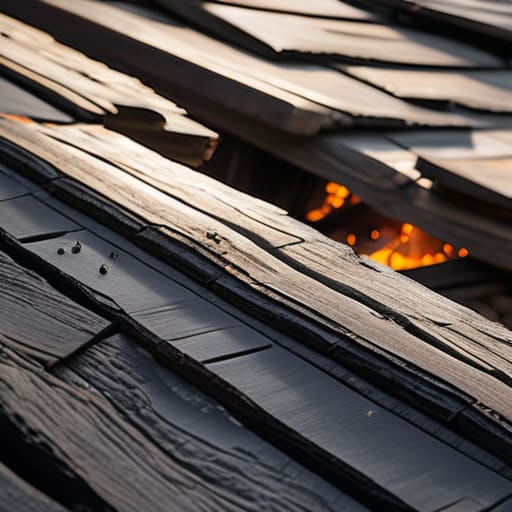
When I walked onto a site after a fire, I wasn’t looking at what the policyholder wanted; I was looking at the age and condition of the assets. If a twenty-year-old roof was destroyed, the insurer isn’t going to hand over a cheque for a brand-new, high-performance slate system. That is where the trap snaps shut. In my experience, the adjuster’s job is to ensure you are returned to the state you were in immediately before the loss, not to provide an upgrade. This is the core of the principle: you are entitled to indemnity, not a windfall.
I often see people get frustrated because they view their home as a living project, much like how one might look at principles of continuous improvement in a professional setting. But insurance isn’t a tool for personal growth and betterment techniques; it is a safety net for loss. If we replaced every damaged, aged component with a top-of-the-line modern equivalent, the cost of premiums would skyrocket to levels no one could afford. You have to understand that the insurer will calculate the “depreciated value” of your old items and deduct the difference between that and the cost of the new ones. It’s not personal; it’s just the math of the contract.
Beyond the Policy Principles of Continuous Improvement in Claims
Now, I’m not a management consultant, and I don’t spend my time looking at corporate slideshows, but even in the claims world, we’ve had to look at the broader principles of continuous improvement to keep our heads above water. In the old days, a claim was a closed loop: something broke, we assessed the damage, and we wrote a cheque. Today, the industry is obsessed with refining the mechanics of how we handle every single interaction. It isn’t just about the math of the payout; it’s about the efficiency of the process itself.
When you look at the way we’ve evolved, you see a bit of applying betterment in business processes within the very way we settle disputes. We’ve moved from blunt-force adjustments to a more surgical approach. This doesn’t mean we’re being “nicer”—it means we are being more precise. By analyzing where the friction lies between a policyholder’s expectation and the actual wording of the contract, we attempt to smooth out the claim lifecycle. It’s a constant, iterative effort to ensure that the “improvement” we’re chasing is accuracy, not just speed.
Applying Betterment in Business Processes Without Losing Your Margin
Now, I know what you’re thinking. You’ve spent the last few sections listening to me talk about how an insurer will shave money off your claim to account for new versus old, and you might be wondering how this concept applies outside of a loss adjuster’s clipboard. If you look at it through a wider lens, applying betterment in business processes isn’t about finding ways to deduct costs; it’s about the disciplined pursuit of efficiency. In the corporate world, the goal is to ensure that every upgrade or process shift actually moves the needle rather than just replacing old inefficiencies with expensive new ones.
The trick is in measuring impact of improvements accurately. Just as I’d look at a damaged commercial property and determine if a repair is a simple fix or an unnecessary upgrade, a business must distinguish between “maintenance” and “true progress.” If you invest in new software or training just because the old version feels clunky, you haven’t achieved betterment; you’ve just increased your overhead. True progress requires a cold, hard look at the data to ensure that the step forward provides a tangible return that outweighs the cost of the transition.
Measuring Impact of Improvements Before the Adjuster Arrives
If you want to avoid a standoff when I finally walk through your door, you need to start measuring impact of improvements long before the damage is done. I’ve sat in many living rooms where a homeowner insisted their new, high-end granite countertops were “just like the old ones,” only to find out they were actually upgrading from laminate. When I see that gap, I have to note it. If you haven’t kept a record of your property’s standard or the specific specifications of your assets, you’re essentially handing the insurer an excuse to apply a deduction.
Don’t wait for a catastrophe to audit your own baseline. Much like how applying betterment in business processes requires a clear understanding of your current operational efficiency, managing a claim requires knowing exactly what your “standard” was. Keep a digital folder of receipts, specification sheets, and even photos of your property in its pre-loss state. If you can prove that a replacement is a like-for-like substitution rather than an upgrade, you’ve done half my job for me. It turns a heated argument about value into a simple matter of fact.
From Social Betterment Strategies to Your Bottom Line
Now, I know what you’re thinking. You’ve spent the last few sections looking at how an adjuster calculates the difference between a patch job and a replacement, and now I’m pivoting to your business operations. It sounds like a leap, but let me explain why the logic is identical. In my years on the road, I saw many business owners struggle because they tried to scale without considering the principles of continuous improvement. They’d invest in new equipment or training, but they never accounted for the “delta”—the gap between where they were and where they were going. If you aren’t accounting for that gap in your internal planning, you’re essentially self-insuring against your own inefficiency.
When we talk about social betterment strategies or investing in your team, you have to look at it through the same lens I used when assessing a commercial property. If you upgrade your staff’s skills, you are effectively “bettering” your human capital. That’s a good thing, but just like an insurance claim, you need to be able to quantify that value to ensure it actually hits your bottom line rather than just being an expensive line item on a spreadsheet. If you can’t measure the improvement, you can’t manage the risk.
Five Ways to Keep Betterment from Eating Your Settlement
- Stop thinking in “new for old” terms. Most people assume a claim replaces what they had with something brand new, but if your policy doesn’t explicitly state “new for old” coverage, the adjuster is going to calculate the value of your item based on its age and wear. You aren’t getting a replacement; you’re getting the depreciated value of what you lost.
- Document the condition, not just the loss. When I was out in the field, I’d look for the maintenance logs. If you can prove your 15-year-old roof was in pristine condition and had been serviced annually, you have a much stronger argument against an adjuster trying to claim that a replacement is an “upgrade” rather than a necessary repair.
- Watch the “like-for-like” trap. If your kitchen was destroyed and you try to rebuild with marble countertops when you previously had laminate, the insurer will happily pay for the laminate and call the rest betterment. If you want the upgrade, you need to be prepared to pay the difference out of your own pocket from the start.
- Read the “Indemnity” clause before you sign. The entire concept of indemnity is to put you back in the same financial position you were in before the loss—not a better one. If your policy is a strict indemnity policy, any improvement made during the repair process is technically a profit, and the insurer is entitled to deduct that “profit” from your check.
- Don’t volunteer the upgrade. This is a hard one, and I’m not telling you to be dishonest, but don’t walk into a claims meeting and start talking about how much better the new security system will be than the old one. Keep the conversation strictly on the functionality and necessity of the replacement to ensure the focus stays on restoring what was lost, not enhancing what you have.
The Bottom Line: What You Need to Remember
Don’t expect a brand-new replacement for a twenty-year-old asset; the adjuster’s job is to return you to where you were, not to give you an upgrade on the insurer’s dime.
Read the specific wording on ‘replacement value’ versus ‘indemnity’ now, because once the smoke clears, the math is already set in stone.
Understand that betterment isn’t a penalty or a way for the insurer to cheat you—it is simply the contractual mechanism that prevents you from profiting from a loss.
The Final Word on Betterment
At the end of the day, betterment isn’t a trick designed to cheat you; it is a mathematical reality of indemnity. We have looked at how insurers use it to prevent you from profiting from a loss, how it impacts your business margins, and why failing to account for it can leave you staring at a massive shortfall in your bank account. Whether you are managing a commercial property or a small shop, you must understand that the goal of insurance is to put you back where you were, not where you would have been had the disaster never occurred. If you don’t account for the gap between your old assets and modern replacement standards, you are effectively self-insuring the difference.
My advice is simple: don’t wait for the adjuster to stand in your foyer with a calculator to find out you’re under-covered. Take the time now to read the fine print, audit your asset values, and understand exactly where the line is drawn between a fair payout and an upgrade. Insurance is a tool, but like any tool, it only works if you know how to handle it. If you approach your coverage with a clear-eyed understanding of the contract, you won’t be blindsided when the claim arrives. You’ll be ready.
Frequently Asked Questions
If I replace a damaged 20-year-old window with a modern energy-efficient version, how much of that cost will the insurer actually deduct as betterment?
The short answer? They’ll likely deduct the lion’s share. If your 20-year-old window was drafty and single-pane, and you insist on a high-spec, triple-glazed energy-efficient model, the insurer sees that as an upgrade, not a restoration. They aren’t in the business of improving your property value; they’re in the business of making you “whole.” Expect them to calculate the cost of a functional equivalent to your old window and leave you to pay the premium for the modern tech.
Is there a way to document the condition of my property before a loss so the adjuster can't claim I'm making an upgrade through a claim?
You can’t argue with a photo, but you can certainly argue with a poorly documented one. If you want to stop an adjuster from claiming a repair is actually an upgrade, you need a “condition baseline.” Every year, take high-resolution photos and videos of your high-value assets—roofing, HVAC, flooring—and keep a simple log of their age and state. When the loss happens, you aren’t just saying it was old; you’re proving it.
Can an insurer use betterment to deny a claim entirely if the repairs would technically result in a "better" state than what existed before the incident?
No, they can’t deny the claim entirely just because the repair makes things better, but they certainly won’t pay for the upgrade. If replacing a cracked, single-pane window requires you to install modern double-glazing to meet current building codes, the insurer will pay for the single-pane equivalent and leave you to foot the difference. They are there to indemnify your loss, not to subsidize your home improvements. It’s a deduction, not a rejection.