
I remember sitting in a damp semi-detached in Reading back in ’98, looking at a claimant who had just lost his entire contents to a fire. He was convinced he was covered, but he hadn’t even glanced at the exclusions regarding electrical faults. It’s that same gap between expectation and reality that frustrates me when people talk about how telematics policies work. Most people see a little black box or a smartphone app and think they’ve found a magic shortcut to a cheaper premium, but they fail to realize they are essentially inviting a digital auditor into their private lives. They see the discount, but they don’t see the fine print that dictates exactly how your braking, cornering, and midnight excursions will be judged.
I’m not here to sell you on the technology or tell you it’s a revolution in driving safety. My job is to pull back the curtain on the actual contract you are signing. I’ll walk you through the mechanics of the data, explain why certain driving habits might quietly invalidate your expected savings, and show you exactly where the insurer’s leverage lies. You won’t get any marketing fluff here—just the plain truth about what you are actually buying.
The Digital Eye How Telematics Policies Work in Reality
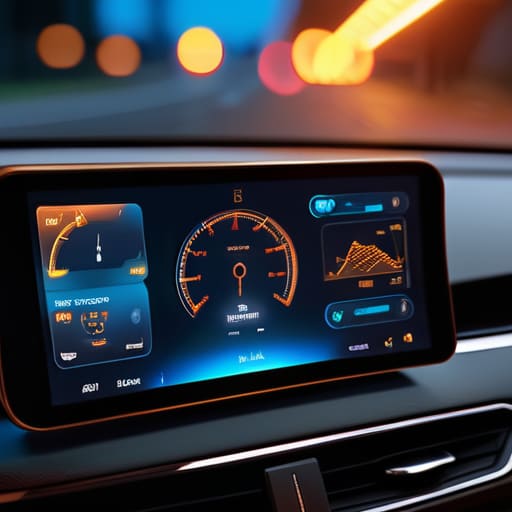
When you sign up for one of these policies, you aren’t just buying a piece of paper; you are agreeing to let a black box—whether it’s a plug-in unit or a smartphone app—act as a silent passenger. This is the core of driving behavior monitoring. It isn’t just checking if you’re speeding; it’s looking at the physics of your movement. The device measures the G-force of every sharp corner, the frequency of your hard braking, and the exact time you pull out of your driveway. While traditional insurance looks at who you are and where you live, this model looks at exactly how you move.
The reality of how insurance companies use data is far more granular than most people realize. They aren’t just looking for “bad” drivers; they are looking for patterns of risk. If you consistently drive at 2:00 AM on winding roads, the algorithm sees a different risk profile than someone who sticks to the morning commute. This shift from static demographics to real-time movement is the fundamental difference in telematics vs traditional insurance. It turns your daily habits into a living, breathing score that dictates your financial liability.
Driving Behavior Monitoring the Silent Arbiter of Your Payout
When I was adjusting claims for standard motor policies, I looked at the wreckage and the police report. With telematics, the insurer isn’t just looking at the wreckage; they’re looking at the ten minutes of data leading up to it. This is the reality of driving behavior monitoring: it isn’t just a suggestion to drive safely, it is a continuous, granular audit of your competency. The device tracks your cornering speeds, your braking force, and even the time of day you’re hitting the road.
You have to understand that the impact of driving habits on premiums isn’t a one-time calculation made at the point of sale. In a traditional policy, you pay for a certain level of risk and that’s that. But here, the risk is fluid. If you find yourself frequently taking high-speed corners or accelerating aggressively, you aren’t just risking a ticket; you are actively feeding the algorithm data that tells the insurer you are a higher liability than you initially claimed to be. It is a constant, silent negotiation between your foot and your wallet.
Telematics vs Traditional Insurance Beyond the Simple Premium Discount
When people ask me about the difference between telematics and traditional coverage, they usually focus on the price tag. They see a lower monthly premium and think they’ve beaten the system. But as someone who has spent decades looking at the fine print, I see a fundamental shift in the nature of the contract. Traditional insurance is a collective pool; you and a group of strangers pay into a fund, and the premiums are calculated based on broad statistical averages of people who look like you. It is a blunt instrument.
Telematics, however, moves the goalposts from who you are to what you actually do. In a standard policy, your age or your postcode might dictate your rate regardless of your skill behind the wheel. With a telematics policy, the insurer is looking for a direct correlation between your specific actions and their risk. This is where the real distinction lies: you are trading a degree of privacy for a personalized risk profile. It isn’t just about a discount; it is a shift from being judged by a demographic to being judged by your own driving behavior monitoring data.
How Insurance Companies Use Data to Redefine Your Risk
In my thirty-seven years in the business, I saw risk through the lens of static data: age, postcode, and vehicle type. It was a blunt instrument. But when we look at how insurance companies use data today, that blunt instrument has been replaced by a scalpel. They aren’t just looking at who you are anymore; they are looking at exactly what you do. Instead of grouping you into a broad, unfair demographic, they are carving out a risk profile based on the actual physics of your driving.
This shift changes the fundamental math of the industry. Through continuous driving behavior monitoring, an insurer can see the difference between a cautious commuter and someone who treats every green light like a starting pistol at a race track. They aren’t just guessing your risk level based on a questionnaire you filled out once a year; they are calculating the impact of driving habits on premiums in real-time. It’s a move away from the “average” driver and toward a model where your individual discipline—or lack thereof—becomes the primary driver of your cost.
The Real Impact of Driving Habits on Premiums and Exclusions
Now, here is where the rubber meets the road—or rather, where the sensor meets the asphalt. Most people view a telematics policy as a simple trade-off: “I drive well, so I pay less.” But in my experience, the impact of driving habits on premiums is far more granular than a simple thumbs-up or thumbs-down. It isn’t just about avoiding a crash; it’s about the subtle mechanics of how you move. If you have a habit of heavy braking at junctions or taking corners with a bit too much enthusiasm, the system doesn’t just see a “bad driver.” It sees a statistical deviation from the low-risk profile you’ve essentially promised to maintain.
You must also understand that this isn’t just about your monthly bill. When we look at the fine print, we see that certain behaviors can actually trigger technicalities in your coverage. While usage-based insurance benefits are designed to reward the cautious, the data collected can also be used to argue that you are operating outside the risk parameters established at the time of your contract. It’s a shift from insuring a vehicle to insuring a specific style of driving, and if that style changes, your financial protection might not follow suit quite as smoothly as you’d expect.
Five Things the Policy Wording Won't Tell You Until You're Looking for a Payout
- Read the ‘Data Usage’ clause before you plug in the device. You aren’t just sharing your speed; you are likely signing away the right to privacy regarding where you go, when you go there, and how often you visit certain locations. Know exactly who else is getting a look at that digital breadcrumb trail.
- Don’t mistake a lower premium for a more flexible policy. A telematics discount is a reward for behavior, not a change in the underlying contract. If you have an accident, the insurer will still look at the same exclusions and conditions they would with a traditional policy—they just happen to have a high-definition video of how you got there.
- Watch out for the ‘Continuous Monitoring’ trap. Some policies are predicated on the device being active and transmitting at all times. If your device loses signal or stops updating because you drove through a dead zone or forgot to charge it, you might find yourself in breach of the policy conditions right when you need the coverage most.
- Understand that ‘Safe Driving’ is a moving target. The algorithm used to score your driving isn’t a law of nature; it’s a set of mathematical weights chosen by the insurer. What you consider a smooth journey might be flagged as ‘erratic’ by a sensor that’s overly sensitive to a slightly heavy foot on a rainy day.
- Check the ‘Impact of Non-Compliance’ section. Many people assume that if they drive poorly, they just pay a higher premium next year. In reality, some specific telematics-led contracts contain clauses that can affect your ability to claim or even invalidate certain types of coverage if your driving profile falls below a specific, pre-defined threshold.
The Adjuster’s Final Word: What You Need to Carry Forward
Don’t mistake a lower premium for a better policy; you are essentially trading your privacy and a degree of predictability for a discount, and you need to be certain you’re comfortable with that trade before the first hard brake is recorded.
Read the fine print regarding how “risk scores” are calculated, because the device doesn’t care if you were rushing to a hospital emergency—it only cares that you exceeded the speed limit and applied the brakes too sharply.
Understand that telematics turns your driving into a continuous audit; in a traditional policy, you’re judged on your history, but with telematics, you are being judged every single minute you are behind the wheel.
The Bottom Line on the Black Box
At the end of the day, a telematics policy isn’t a magic discount; it is a trade-off. You are trading your privacy and a constant stream of granular driving data for a potentially lower premium. We have looked at how that digital witness tracks your every hard brake, how insurers use that data to redefine your risk profile, and how your habits—not just your age or location—now dictate your costs. It is a shift from the old way of guessing your risk to a system of mathematical certainty. If you drive like a professional, the technology works for you. If you drive like a teenager on a Friday night, the technology is simply documenting the evidence that justifies your higher costs.
My advice, after thirty-seven years of looking at the fine print, is to stop treating insurance as a “set and forget” monthly debit. Whether you have a black box in your car or a traditional policy in your drawer, read the wording before the accident happens. Understanding exactly how your data is being used and what specific behaviors might trigger a premium hike is the only way to stay in control. Insurance is a contract, and like any contract, the person who understands the terms is the one who isn’t caught off guard when the claim finally lands on the desk. Don’t just buy the price; understand the obligation.
Frequently Asked Questions
If I have a genuine accident that wasn't my fault, will the telematics data still penalize my premium because of how I was driving leading up to the impact?
Here is the hard truth: the insurer will look at the accident itself to determine liability, but they will also look at the ten minutes preceding it. If the data shows you were speeding or braking sharply just before the impact, that’s a recorded risk event. Even if you aren’t “at fault” for the collision, the telematics box has already logged your behavior as high-risk. You might win the claim, but your premium will likely reflect the data.
What happens to my coverage if the device fails or if I drive a different vehicle that isn't the one the data is being collected from?
This is where the wording gets tricky. First, if the device fails, you haven’t just lost a gadget; you’ve likely breached a condition of your policy. Most insurers view continuous data as a requirement for coverage, not a suggestion. If the data stops, they stop assuming you’re a safe driver. As for switching cars, unless you’ve specifically notified them and updated the device, you’re essentially driving uninsured. Check your schedule—if that car isn’t listed, you’re flying blind.
Can the insurer use the data collected by my telematics device to deny a claim based on a technicality in how I drive, even if the accident itself is covered?
It’s a common misconception that if the accident is covered, the claim is paid. Not necessarily. While the device might not “cause” the crash, the data can be used to argue you breached the policy conditions. If your wording requires “reasonable care” or specifies certain driving restrictions, and the data shows consistent speeding or aggressive cornering, an adjuster might argue you’ve fundamentally altered the risk profile you agreed to cover. It’s not a technicality; it’s a breach of contract.